

Early Warning Signs of Termite Damage Every Property Owner Should Know
At AKS Facilities, trained technicians inspect and treat for termites annually in residential and commercial buildings. Knowing what to look for empowers you to prevent further damage and extra costs. For deeper insight, explore natural termite enemies & complete control guide.
🔍 10 Early Warning Signs of Termite Infestation
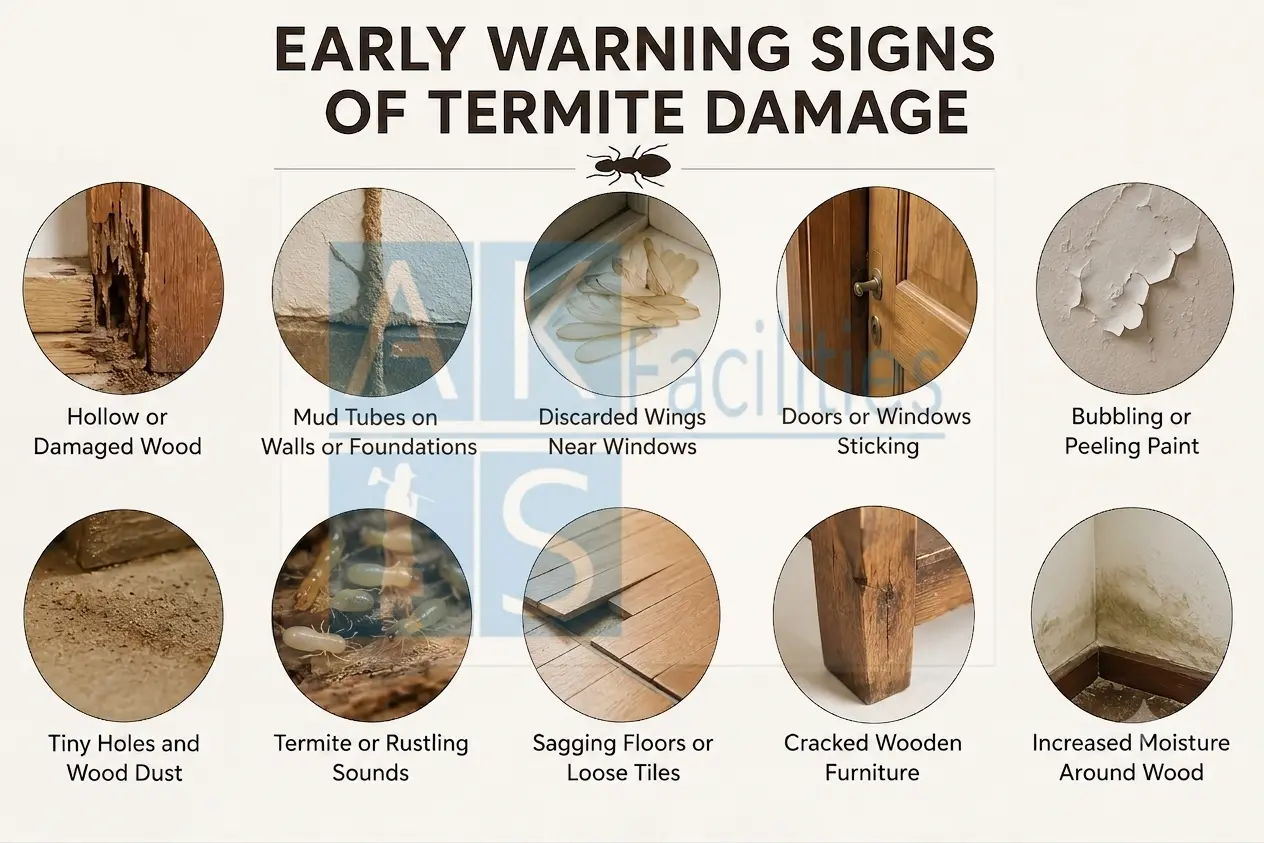
Termites consume wood from inside out. If timber sounds hollow when tapped, breaks easily, or feels unusually light, professional inspection is urgent. Surface may appear intact while internal damage spreads.
Pencil-sized mud tunnels used by subterranean termites to travel while avoiding light. Commonly spotted on foundation walls, basements, crawl spaces, plumbing lines and support pillars. Fresh mud tubes indicate active colonies.
Swarmers shed wings after flight. Piles of small, translucent wings around windows, doors, balconies or light fixtures signal a nearby colony. Learn more about what termite damage actually looks like.
Moisture from termite activity warps wooden frames, causing sudden sticking. While humidity can contribute, combined with other signs it strongly points to infestation.
Often mistaken for water damage. Bubbling, cracked, or peeling paint without plumbing leaks may be termites tunneling just beneath the surface.
Drywood termites leave tiny exit holes and pale wood-colored pellets. Fine dust or piles under furniture, wardrobes, or skirting boards confirm activity.
Soldier termites bang heads against wood to warn the colony; worker termites create rustling while tunneling. Quiet nighttime hours make these sounds more noticeable.
Termites attacking joists/subfloors cause uneven, soft, or sagging areas. Crippled joists compromise structural stability. Immediate inspection prevents collapse risks.
Beds, sofas, dining tables, wardrobes, office furniture and cabinets develop cracks, weak joints, or unexplained deterioration. Refer to home protection strategies in Gurgaon.
Termites thrive in damp environments caused by leaks, poor drainage, roof seepage, or high humidity. Fixing moisture and scheduling professional termite control reduces risk dramatically.
Why Early Detection Matters
A small colony multiplies rapidly, establishing multiple nests before visible signs appear. Delaying treatment leads to expensive structural repairs, furniture replacement, and ceiling/joist reinforcement. Professional extermination uses specialized inspection equipment to locate hidden colonies. Early intervention protects property and lowers overall treatment costs.
For reliable termite management across residential, commercial, warehouses, hotels, hospitals, and restaurants, AKS Facilities employs approved chemicals and advanced methods. We also cover pre-construction anti-termite treatment and detailed inspections.
Don’t wait for visible damage to escalate.
Contact AKS Facilities for a professional termite inspection.
📞 Schedule InspectionAlso read: Spotting termite damage visually
Common Questions Answered
Hollow-sounding wood, mud tubes on walls/foundations, discarded wings near windows, peeling paint, sticky doors, and small holes with frass (termite droppings).
Both cause peeling paint and swollen wood, but termites leave mud tubes, hollow sounds, wings, and frass. A professional inspector verifies the cause accurately.
Termites cannot eat concrete, but they travel through cracks to reach wooden doors, furniture, false ceilings, and sub-floors inside the building.
Depends on colony size and termite species. A well-established colony can cause substantial damage within months to a few years before detection.
Most homeowners’ policies do not cover termites, as they’re considered preventable with regular maintenance. Check your specific policy.
At least once every 12 months. Immediately if you notice mud tubes, hollow wood, swarming termites, or damaged items.
DIY products rarely eliminate entire colonies. Professional pest control identifies the colony’s exact location for long-term protection.
Moisture attracts them: untreated wood, leaking pipes, wood-to-soil contact, and damp foundation areas. Dry property maintenance helps deter them.
Effectiveness depends on conditions and method. With regular maintenance, some professional treatments protect for several years.
If you’ve noticed any warning signs, contact AKS Facilities for a comprehensive termite inspection.
Explore our
Gurgaon termite control service or
home protection guide.