
If you are searching for what is a termite’s worst enemy, what kills termites instantly, what kills termites immediately, natural enemies of termites, termite treatment, anti-termite treatment, termite control services, and permanent termite removal in Gurgaon, Delhi, Noida, Faridabad, and Ghaziabad, this complete guide covers everything you need to know.
Termites are among the most destructive pests found in homes, offices, commercial buildings, apartments, villas, warehouses, restaurants, retail stores, and industrial spaces across India. Every year, thousands of property owners suffer heavy financial losses because termites silently damage wooden structures from the inside before visible signs appear.
In cities like Gurgaon, Delhi, Noida, Faridabad, and Ghaziabad, termite infestations are increasing rapidly because of underground moisture, humid weather, wooden interiors, rapid construction, and changing environmental conditions.
- What is a termite’s worst enemy?
- What do termites hate most?
- What kills termites immediately?
- What kills termites instantly?
- How to remove termites permanently?
- What is the best method for termite control?
- What are the natural enemies of termites?
- Why are termite queens so big?
- What happens if a termite queen is killed?
- What kills the queen termite?
- What is the cost of termite control in Delhi?
Understanding Termites
Termites are social insects that survive in colonies. Although they are small in size, termites can cause severe structural and furniture damage if left untreated. These pests mainly feed on cellulose, which is commonly found in wood, paper, plywood, cardboard, furniture, wooden flooring, doors, windows, false ceilings, and modular kitchens.
Unlike cockroaches or ants, termites usually remain hidden inside walls, underground tunnels, and wooden structures. This makes termite infestations difficult to identify during the early stages.
Professional termite inspection and anti-termite treatment are essential because termites continue spreading silently until major damage becomes visible.
What Is a Termite’s Worst Enemy?
A termite’s biggest enemy is not just one thing. Termites have multiple natural predators and environmental weaknesses, but the most effective long-term enemy of termites is professional anti-termite treatment combined with colony elimination.
The biggest enemies of termites include:
- Ants
- Sunlight
- Dry environments
- Boric acid
- Heat treatment
- Professional anti-termite chemicals
- Foam injection treatment
- Soil barrier systems
- Termite bait systems
- Nematodes
- Fungi
While natural enemies may reduce termite activity outdoors, professional termite control is necessary to eliminate hidden colonies inside homes and offices permanently.
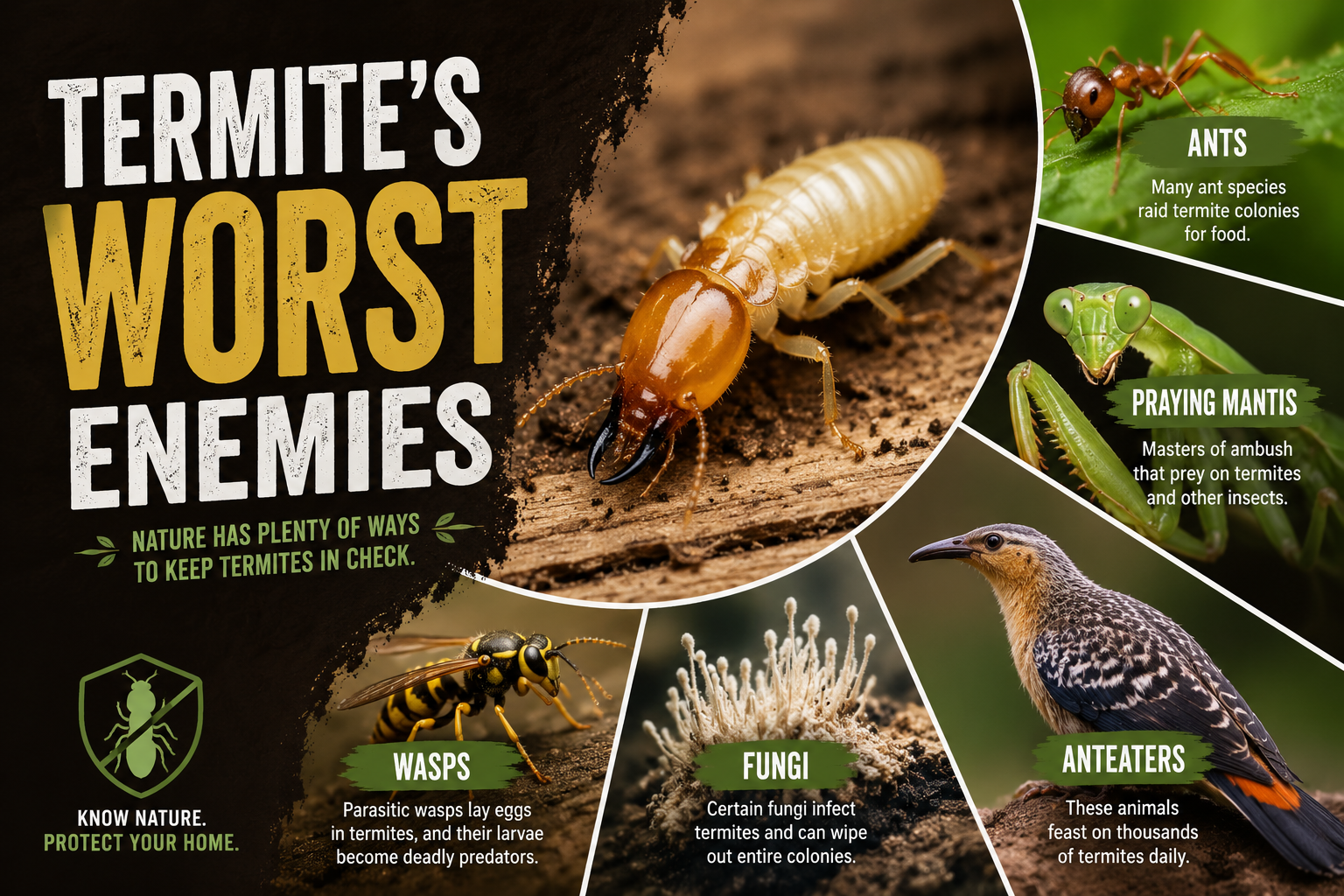
Natural Enemies of Termites
Many people are surprised to learn that termites have several natural predators in forests, gardens, and outdoor ecosystems. These predators naturally help reduce termite populations in soil environments and open areas.
However, natural predators alone usually cannot stop severe termite infestations inside buildings because termites hide underground and inside wooden structures.
1. Ants – Biggest Natural Enemy of Termites
Ants are widely considered the strongest natural enemy of termites. Both insects compete for food, territory, and nesting space.
Some aggressive ant species actively invade termite colonies and attack worker termites and soldiers.
- Ants attack termites in groups
- They invade termite mud tubes
- They destroy exposed termite workers
- They interrupt termite movement
- They force termites to stay hidden underground
This is one reason termites create mud tunnels and protected underground pathways.
2. Birds That Eat Termites
Several bird species feed on termites, especially during swarming season when flying termites emerge after rain.
- Woodpeckers
- Sparrows
- Crows
- Swallows
- Mynas
During monsoon seasons in Gurgaon and Delhi NCR, flying termites become highly visible around lights and buildings, making them easy prey for birds.
3. Nematodes – Microscopic Termite Killers
Beneficial nematodes are microscopic parasitic worms used in eco-friendly biological pest control systems.
These organisms enter termite bodies, release bacteria, and kill termites internally.
Some advanced biological termite control systems use nematodes for outdoor termite management.
4. Spiders
Spiders naturally prey on flying termites and smaller worker termites. Although spiders cannot destroy entire termite colonies, they help reduce termite movement around gardens and buildings.
5. Lizards & Geckos
House lizards and geckos commonly feed on flying termites and insects around lights during termite swarming periods.
6. Frogs & Toads
Frogs and toads consume termites in damp environments because termites are commonly found in moisture-rich soil regions.
7. Beetles & Centipedes
Certain beetles and centipedes attack termite larvae and worker termites inside soil ecosystems.
8. Fungi & Natural Diseases
Some fungi naturally infect termite colonies and weaken them over time. Modern eco-friendly termite control systems sometimes use fungal biological methods.
Why Natural Enemies Cannot Fully Remove House Termites
Although termites have several predators, natural enemies usually cannot eliminate infestations inside homes or commercial properties because termites:
- Live underground
- Stay hidden inside walls
- Build protected mud tubes
- Spread rapidly
- Hide inside furniture
- Create hidden colonies
This is why professional termite treatment remains essential for permanent termite removal.
What Do Termites Hate Most?
Termites hate environmental conditions that disturb their survival cycle.
- Direct sunlight
- Dry conditions
- Boric acid
- Orange oil
- Heat exposure
- Professional anti-termite chemicals
- Low moisture conditions
What Kills Termites Immediately?
Several termite treatments can kill visible termites quickly.
- Boric acid treatment
- Professional termite spray chemicals
- Foam injection treatment
- Heat treatment systems
- Orange oil treatment
- Direct chemical application
However, visible termites represent only a small portion of the colony. Killing visible termites does not always eliminate the hidden queen termite.
What Kills Termites Instantly?
Fast-acting termite control solutions include:
- Fipronil-based chemicals
- Imidacloprid termite solutions
- Foam injection systems
- Industrial pesticide sprays
- Heat treatment technology
Professional exterminators focus on eliminating the queen termite and underground colony rather than only surface termites.
How to Remove Termites Permanently
Permanent termite removal requires scientific treatment methods and long-term monitoring.
Professional Inspection
Experts inspect:
- Termite tunnels
- Moisture points
- Wood damage
- Mud tubes
- Hidden colony areas
Drill & Fill Treatment
Anti-termite chemicals are injected deep into affected areas through drilled holes.
Soil Treatment
Chemical barriers are created around foundations and underground entry points.
Wood Treatment
Wooden furniture and interiors are treated with anti-termite chemicals.
Monitoring & Prevention
Regular termite inspection prevents re-infestation.
What Is the Best Method for Termite Control?
The best termite control method depends on infestation severity and property type.
Pre-Construction Anti-Termite Treatment
Applied before construction begins to provide long-term protection.
Post-Construction Termite Treatment
Used after termite infestation appears in existing buildings.
Termite Bait Systems
Special bait systems eliminate termite colonies gradually by targeting worker termites and queens.
Chemical Barrier Treatment
Protective barriers are created around foundations and soil zones.
Foam Injection Technology
Foam penetrates deep into wooden furniture, wall cavities, and hidden termite galleries.
Why Are Termites Common in Gurgaon & Delhi NCR?
- Humid monsoon weather
- Underground moisture
- Rapid urban construction
- Wooden interiors
- Poor waterproofing
- Soil-to-wood contact
Commercial buildings, apartments, villas, offices, restaurants, and warehouses are highly vulnerable to termite attacks in Delhi NCR.
Signs of a Termite Infestation
- Mud tubes on walls
- Hollow wooden furniture
- Discarded termite wings
- Bubbling paint
- Tight doors and windows
- Powder-like residue
- Damaged plywood
Residential Termite Problems
Common household termite targets include:
- Beds
- Sofas
- Wardrobes
- Modular kitchens
- Wooden flooring
- Doors & windows
- False ceilings
- Plywood furniture
Commercial Termite Problems
Commercial properties face even bigger termite risks.
- Office cabins
- Wooden flooring
- Retail display counters
- Restaurant interiors
- Warehouse pallets
- Storage furniture
DIY vs Professional Termite Control
| DIY Methods | Professional Services |
|---|---|
| Temporary results | Permanent solutions |
| Surface-level treatment | Deep colony elimination |
| Limited effectiveness | Industrial-grade chemicals |
| No warranty | Service warranty |
| High re-infestation risk | Long-term protection |
How Long Does Termite Treatment Last?
Professional anti-termite treatment may last between 3 to 5 years or longer depending on:
- Chemical quality
- Application method
- Moisture levels
- Property condition
How to Prevent Future Termite Infestation
- Keep areas dry
- Fix leakage quickly
- Improve ventilation
- Seal cracks and gaps
- Avoid wood-to-soil contact
- Use anti-termite-treated wood
- Schedule regular termite inspections
Related AKS Facilities Termite Services
Termite Control Service in Gurgaon
Professional termite control services for homes, offices, commercial buildings, and furniture protection.
Read More →Termite Treatment in Gurgaon
Advanced anti-termite treatment using chemical barrier systems and drill-fill technology.
Explore Service →Protect Your Home From Termites
Learn preventive measures and safety tips to keep termites away permanently.
View Guide →Prepare Your Home for Termite Treatment
Important preparation checklist before professional termite control service begins.
Read Article →Pest Control Services in Gurgaon
Complete pest control solutions including termites, cockroaches, rodents, mosquitoes, and ants.
Explore Pest Control →Why Choose AKS Facilities?
- Experienced termite control technicians
- Safe & approved chemicals
- Affordable pricing
- Residential & commercial expertise
- Advanced treatment methods
- Quick response service
- Long-lasting termite protection
Frequently Asked Questions
What is a termite’s worst enemy?
Professional anti-termite treatment, ants, sunlight, and dryness are considered the biggest enemies of termites.
What are the natural enemies of termites?
Ants, birds, spiders, frogs, fungi, nematodes, beetles, centipedes, and lizards are natural termite predators.
What do termites hate most?
Termites hate sunlight, dry environments, boric acid, and anti-termite chemicals.
What kills termites immediately?
Professional termite sprays, boric acid, foam injections, and heat treatment can kill termites quickly.
How to remove termites permanently?
Permanent termite removal requires professional inspection, chemical treatment, colony elimination, and long-term monitoring.
What is the best termite control method?
Chemical soil barrier treatment combined with drill-and-fill technology is considered highly effective.
What is the cost of termite control in Delhi?
Pricing depends on property size and infestation level. Residential termite treatment generally starts from ₹1,500 onwards.
Why are termite queens so big?
Queen termites become large because their bodies expand for continuous egg production and colony growth.
What happens if a termite queen is killed?
The colony weakens significantly, but some termite species may create replacement queens.
What kills the queen termite?
Professional bait systems and colony poison transfer methods are highly effective against queen termites.
Book Professional Termite Control Service Today
Protect your home, office, furniture, warehouse, restaurant, and commercial property from hidden termite damage with expert anti-termite treatment by AKS Facilities.
Contact AKS Facilities