

Reasons Why Cockroaches Come Back After Pest Control Treatment
You have spent money on professional cockroach pest control, your kitchen has been treated, gel bait has been applied to corners and cracks, and for a few days everything seems fine. But a week or two later, you switch on the kitchen light at night and spot cockroaches crawling around the sink or kitchen counter again.
It is frustrating, especially when you have already paid for a professional treatment and expected the problem to be resolved.
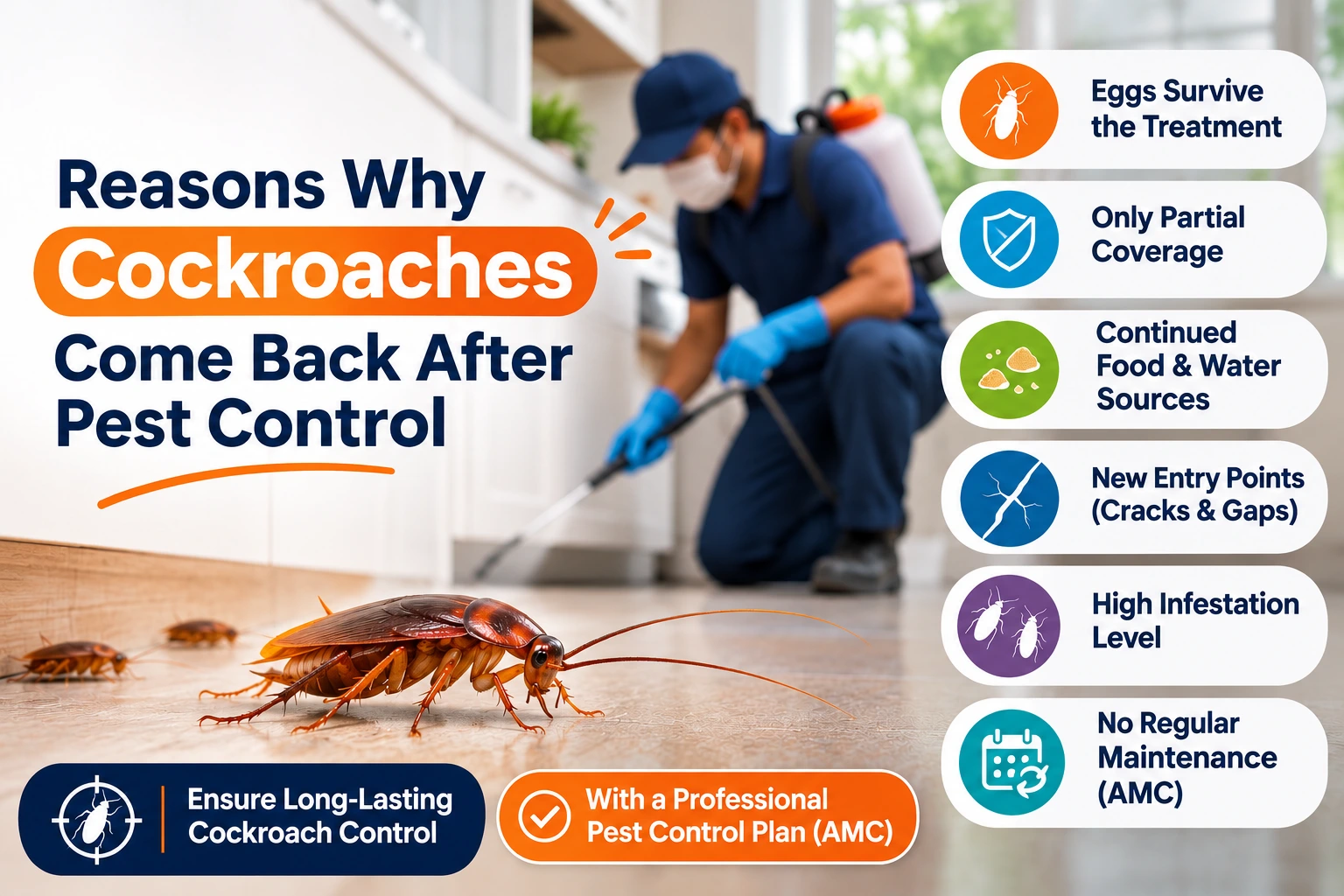
However, seeing cockroaches after pest control does not always mean the treatment has failed. Cockroaches may have survived in hidden areas, eggs may have hatched after treatment, or new cockroaches may be entering through drains, wall gaps and neighbouring apartments.
This problem is particularly common in high-rise residential societies across Gurgaon, where multiple apartments share plumbing lines, drainage systems and service shafts.
Let’s understand why cockroaches return after pest control, what you should expect after treatment and how to prevent another infestation.
In This Article
7 Main Reasons Why Cockroaches Come Back After Pest Control
1Cockroach Eggs May Survive the Treatment
One of the most common reasons cockroaches reappear after pest control is that their eggs were not affected by the treatment.
German cockroaches, which are frequently found in kitchens, produce protective egg capsules known as oothecae. Each capsule can contain approximately 30–40 eggs, depending on the species and conditions.
These egg cases are often hidden inside cabinet hinges, kitchen drawers, cracks, electrical fittings and other difficult-to-reach places.
Most conventional insecticide sprays target active cockroaches and may not penetrate the protective egg casing. As a result, young cockroaches, known as nymphs, can emerge even after the initial treatment.
This is why heavily infested properties may require a follow-up inspection and treatment. The pest control professional can assess whether newly hatched cockroaches need additional attention.
2Cockroaches Are Hiding in Areas That Were Not Treated
Cockroaches are excellent at hiding. During the daytime, they usually remain inside dark, narrow and undisturbed spaces.
You may notice them around the kitchen sink, but their actual hiding places could include:
- Behind refrigerators and microwave ovens.
- Inside kitchen cabinet hinges and drawer channels.
- Under the kitchen sink and near drainage pipes.
- Behind wall-mounted appliances.
- Inside electrical panels and concealed gaps.
- Around bathroom drainage openings.
- Behind wooden furniture and storage units.
If pest control is performed only on visible surfaces, a significant part of the infestation may remain undisturbed.
A proper cockroach treatment should begin with a detailed inspection to identify nesting areas, movement patterns and possible entry points.
3Food and Water Are Still Easily Available
Cockroaches can survive in difficult conditions, but they still need access to food, water and suitable shelter.
Even a small amount of moisture can help them survive and multiply. A leaking kitchen tap, damp sink cabinet, uncovered dustbin or leftover food can provide everything they need.
Common conditions that attract cockroaches include:
- Leaking taps and plumbing connections.
- Wet kitchen sinks and drainage areas.
- Uncovered food and grocery containers.
- Pet food left overnight.
- Overflowing dustbins.
- Grease and food particles behind kitchen appliances.
Pest control treatment helps reduce the existing cockroach population, but it cannot permanently eliminate the conditions that attract them.
Keeping the kitchen dry, storing food properly and removing waste regularly are important parts of long-term cockroach prevention.
4The Treatment Product May Not Be Suitable for the Cockroach Species
Not every cockroach infestation responds in the same way to a particular treatment.
German cockroaches, American cockroaches and brown-banded cockroaches have different habits and preferred hiding places. Therefore, the treatment method should be selected according to the species and severity of the infestation.
Another important factor is pesticide resistance.
Some German cockroach populations have developed resistance to commonly used insecticides. Research has also identified bait aversion, where certain cockroach populations avoid particular bait formulations.
If the same ineffective product is repeatedly used, the infestation may continue despite multiple treatments.
An experienced pest control technician should assess the situation and select suitable products and application methods rather than repeatedly using the same treatment without checking the results.
5Cockroaches Are Entering from Neighbouring Apartments
This is a particularly common problem in apartments and residential societies in Gurgaon.
You may keep your kitchen clean, dispose of garbage regularly and maintain proper hygiene, but cockroaches can still enter your home from neighbouring flats.
They can travel through:
- Common plumbing lines.
- Drainage connections.
- Electrical and service shafts.
- Gaps around water pipes.
- Wall openings and false ceilings.
- Shared utility areas.
For example, if a neighbouring apartment has a serious German cockroach infestation, cockroaches may gradually spread to adjoining flats through shared structural spaces.
Treating only one apartment may provide temporary relief, but the problem can return if the source of infestation remains untreated.
In such situations, coordination with the housing society’s maintenance team is important. Treating affected apartments, common areas and potential entry points together can provide better results.
6Cleaning or Using Household Sprays at the Wrong Time
What you do after pest control treatment can affect its effectiveness.
Some residents immediately wash kitchen cabinets, wipe treated corners or mop every surface after the technician leaves. This can remove the residual insecticide before it has had sufficient time to work.
Similarly, using commercially available cockroach sprays near professional gel bait placements may contaminate the bait or discourage cockroaches from feeding on it.
Instead of helping, repeated use of household sprays can sometimes disturb the treatment and cause cockroaches to move into other hiding places.
Always follow the technician’s instructions regarding cleaning, drying time, kitchen use, food preparation surfaces and areas that should not be sprayed or wiped.
The correct after-treatment instructions depend on the products and methods used.
7No Follow-Up Inspection or Preventive Treatment
A single pest control visit may be sufficient for a minor cockroach problem, but a heavy infestation often requires additional attention.
Even after the initial treatment, some cockroaches may remain hidden, and newly hatched nymphs may appear later.
Without a follow-up inspection, it becomes difficult to determine whether the infestation has been controlled or whether additional treatment is necessary.
A professional pest management approach should include an assessment of the initial infestation, suitable treatment, monitoring and follow-up wherever required.
For residential societies, offices, restaurants and commercial buildings with recurring cockroach problems, a planned pest management programme may be more effective than waiting until the infestation becomes visible again.
Why Are Cockroaches Increasing in Gurgaon Apartments?
Cockroach problems are not limited to homes with poor housekeeping. Even well-maintained apartments can experience recurring infestations because of the way residential buildings are designed and maintained.
High-Rise Residential Buildings
Large societies have multiple apartments connected through common plumbing systems, drainage lines and service shafts. These spaces can provide routes for cockroaches to move between flats.
Warm and Humid Conditions
Cockroaches prefer warm environments and access to moisture. During humid summer and monsoon conditions, damp kitchens, bathrooms and drainage areas can become suitable hiding places.
Drainage and Plumbing Issues
Damaged drain covers, leaking pipes and gaps around plumbing connections can create entry points for cockroaches.
Ongoing Construction and Renovation
Construction activities and renovation work can disturb existing pest habitats. Cockroaches may move into nearby apartments while searching for shelter.
Cardboard Packaging and Grocery Deliveries
Grocery cartons, delivery boxes and used packaging can provide hiding places and may occasionally carry cockroaches or their egg cases into homes.
Poorly Maintained Common Areas
Garbage collection points, basement storage areas, parking spaces and common utility rooms can support pest activity if they are not maintained properly.
What Does Professional Cockroach Pest Control Actually Involve?
When hiring cockroach pest control services in Gurgaon, do not judge the quality of treatment simply by how much chemical is sprayed. The inspection, product selection and application technique are equally important.
1. Detailed Inspection
The technician should inspect the kitchen, bathrooms, cabinets, drainage areas, utility spaces and other potential hiding places. The purpose is to identify cockroach activity, possible nesting locations and the source of infestation.
2. Identification of Cockroach Species
Different cockroach species have different behaviour patterns. German cockroaches are commonly associated with kitchens and indoor appliances, whereas American cockroaches are often found around drains, basements and damp areas.
3. Gel Baiting and Targeted Treatment
Cockroach gel bait can be applied in suitable locations, such as cabinet hinges, cracks, corners and other areas where cockroaches are active. Residual insecticide treatment may also be used where appropriate.
4. Attention to Entry Points and Hiding Places
Treating visible cockroaches alone is not enough. The technician should also identify gaps around plumbing connections, drainage openings, cabinets and other places where cockroaches may enter or hide.
5. Follow-Up Inspection
For moderate to severe infestations, a follow-up inspection may be necessary after approximately two to three weeks, depending on the treatment used and the level of activity. This helps assess whether the cockroach population has reduced and whether further treatment is needed.
6. Clear After-Treatment Instructions
Customers should receive practical instructions about cleaning, food storage, ventilation, drying time and precautions for children and pets. A professional service should explain what has been treated and what the customer should do afterwards.
No pest control company can honestly promise that cockroaches will never enter a property again. However, a properly planned treatment can significantly reduce the existing infestation and help prevent recurring problems.
What Should You Do After Cockroach Pest Control?
Your cooperation after treatment plays an important role in controlling cockroaches. Here are some simple steps to follow:
- Repair leaking taps: Check kitchen sinks, bathroom pipes and other moisture-prone areas.
- Store food properly: Keep groceries, flour, cereals and pet food in sealed containers.
- Maintain dustbins: Dispose of kitchen waste regularly and use covered bins.
- Remove unnecessary cardboard: Do not allow delivery boxes and old packaging to accumulate inside the kitchen.
- Seal visible gaps: Close suitable openings around plumbing pipes, cabinets and wall connections.
- Keep kitchen surfaces dry: Avoid leaving standing water in sinks and around drainage areas.
- Avoid unnecessary sprays: Do not use household cockroach sprays around professional gel bait placements unless advised by the technician.
- Follow cleaning instructions: Clean treated surfaces only as directed by the pest control professional.
- Monitor cockroach activity: Note where and when cockroaches are appearing after treatment.
- Inform society management: If cockroaches are coming from common drains or neighbouring apartments, report the issue to the maintenance team.
When Should You Contact the Pest Control Company Again?
Seeing an occasional cockroach during the initial days after treatment does not automatically mean that the treatment has failed.
Some cockroaches may emerge from hidden spaces after their hiding places are disturbed, while others may come into contact with the treated areas later.
However, you should contact the pest control company if:
- Live cockroach activity remains high after 10–14 days.
- You continue seeing baby cockroaches in large numbers.
- Cockroaches are regularly appearing during the daytime.
- Activity is increasing instead of decreasing.
- You are noticing cockroaches in previously unaffected rooms.
- The same problem returns shortly after treatment.
Daytime sightings can sometimes indicate a heavy infestation or overcrowded hiding places, although they are not conclusive on their own.
A fresh inspection can help identify missed hiding areas, new entry points or the need for a different treatment approach.
Frequently Asked Questions About Cockroaches After Pest Control
1. Why am I seeing more cockroaches after pest control?
Some cockroaches may become more visible after treatment because their hiding places have been disturbed or they are moving away from treated areas. However, continued high activity may also indicate untreated hiding spots or a severe infestation.
2. Is it normal to see baby cockroaches after pest control?
Yes, it is possible. Cockroach egg cases may survive conventional insecticide treatment, and newly hatched nymphs can appear afterwards. This is one reason why follow-up inspections are sometimes necessary.
3. How long does it take for cockroaches to disappear after pest control?
The time depends on the cockroach species, infestation level, treatment method and property conditions. Some activity may continue during the initial days, but there should generally be a noticeable reduction. Heavy infestations may require additional treatment.
4. Can cockroach eggs survive after spraying?
Yes. Many conventional sprays do not reliably penetrate cockroach egg cases. Eggs hidden inside protected areas may hatch after the treatment, which is why monitoring and follow-up treatment can be important.
5. Why do cockroaches return even when my house is clean?
Cleanliness helps reduce food availability, but cockroaches also need moisture and shelter. They can enter through plumbing connections, drainage systems, wall gaps and neighbouring apartments, even when your home is regularly cleaned.
6. How often should cockroach pest control be done in Gurgaon?
There is no fixed schedule for every property. It depends on the severity of the infestation, the type of cockroach and the surrounding conditions. Homes with recurring problems may benefit from periodic inspection and preventive pest management.
7. Can cockroaches develop resistance to pest control chemicals?
Yes. Some cockroach populations, particularly German cockroaches, have developed resistance to commonly used insecticides. Certain populations may also avoid specific bait formulations. Selecting suitable products and treatment methods is therefore important.
8. Is it safe to stay at home during cockroach pest control?
It depends on the products and application methods used. Gel bait treatments and spray treatments have different precautions. Follow the technician’s instructions regarding food, children, pets, ventilation and re-entry time. Do not assume that every treatment is safe for immediate occupancy.
9. What should I do if cockroaches are coming from my neighbour’s apartment?
Inform your housing society’s maintenance team or management. If the infestation is spreading through common drainage or service shafts, coordinated treatment of affected apartments and common areas may be necessary.
10. Is one cockroach pest control treatment enough?
A single treatment may be sufficient for a minor infestation. However, a widespread infestation, particularly involving German cockroaches, may require monitoring and follow-up treatment. The decision should be based on the inspection and results.
Get Professional Cockroach Pest Control Services in Gurgaon
Recurring cockroach problems can be frustrating, particularly when they continue despite regular cleaning and previous pest control treatments.
At AKS Facilities, we understand that effective cockroach control involves more than simply spraying insecticide around the kitchen. Identifying hiding places, understanding cockroach behaviour and selecting suitable treatment methods are important parts of the process.
We provide professional pest control services for residential and commercial properties in Gurgaon and across Delhi NCR.
Whether you are dealing with German cockroaches in your kitchen, American cockroaches around drainage areas or recurring cockroach activity in an apartment, our team can assess the infestation and recommend a suitable treatment approach.
Request a Pest Control EnquiryRequest a Cockroach Pest Control Service
Tell us about your cockroach problem. Our team can help you discuss a suitable pest control solution for your property.
Complete the enquiry form below and our team will get in touch.
Related service: Professional Pest Control Services in Gurgaon – AKS Facilities